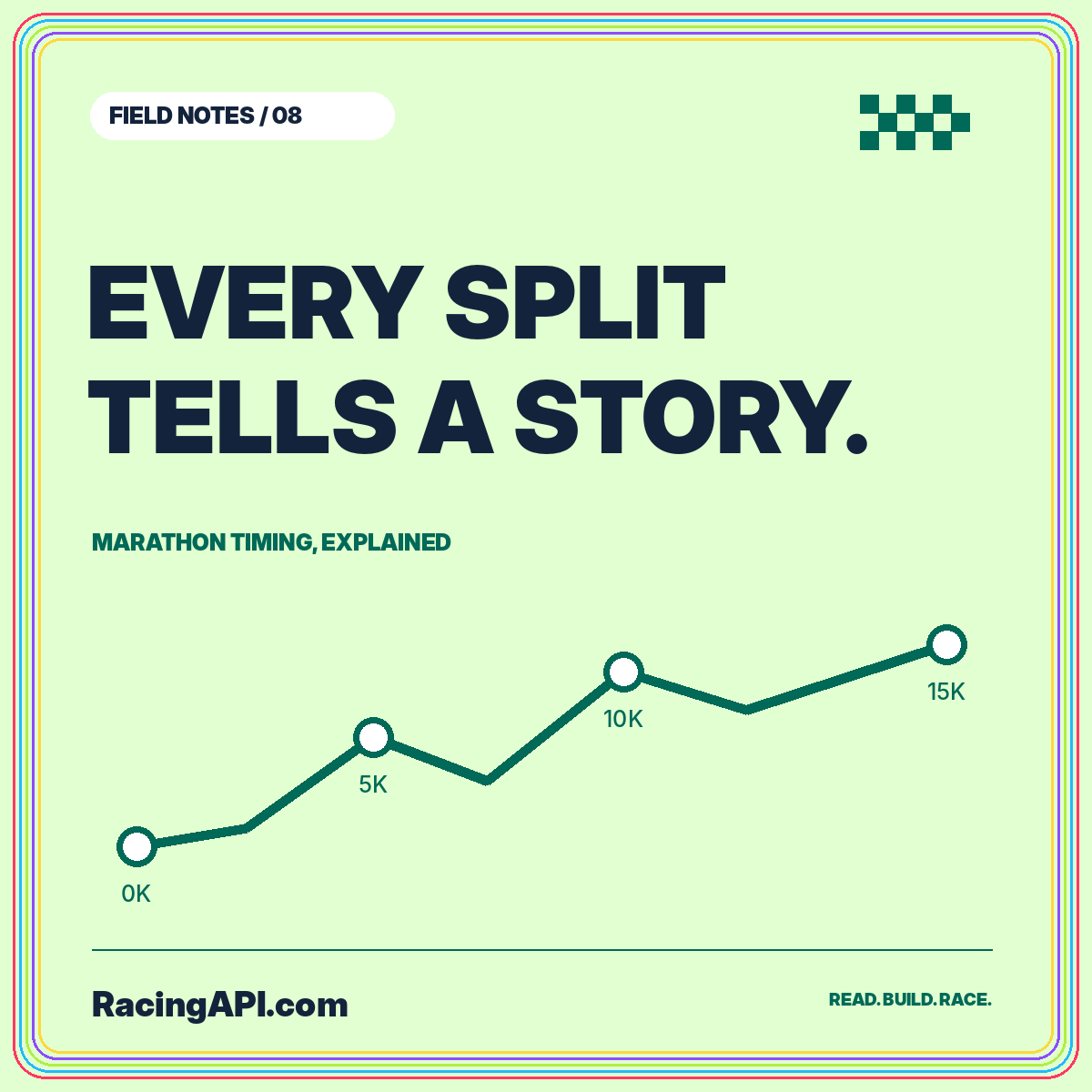
Marathon racing API: chip time, splits, and honest tracking
Keep timing bases, checkpoint passages, estimates, and classification state distinct in a runner tracker.
Read field noteFrom running checkpoints to boat-racing scores, learn why different competitions need different timing models. Keep measurements, estimates, and published classifications clearly separated.
Read the guides below with a specific interface in mind: the event you need to identify, the measurement you need to explain, and the result state your audience should see. Treat each article’s proposed application model as a starting point, then confirm the selected provider’s actual contract.
Use the fictional sample explorer to connect these ideas to a concrete response. The data-model reference explains the shared fields; sport-specific extensions remain deliberately small. No live subscription or production data access is implied.
3 field notes in this reading path.
Keep timing bases, checkpoint passages, estimates, and classification state distinct in a runner tracker.
Read field noteLoad a local fixture, validate its records, format durations, and render an accessible results table.
Read field noteBuild around the competition format, with explicit units, rule context, progress, and published scoring.
Read field note